Shitot
Why are there so many different Shitas for tying Tzitzit?
The reason for the wide variety of Shitot (methods) is due to the Gemara's unclarity on how exactly to tie tzitzit, resulting in a wide range of interpertations on Tzitzit Tying Methods. Below, we will try to cover the more common ones, as well as their sources.
Remmah (Classic Ashkenazi)
Remmah, or Classic Ashkenazi, as we like to call it, is the most common and well known of Tzitzit methods. It was acually introduced after the loss of Tchellet. The gematria of Tzitzit, plus the 5 knots and 8 strings, equals to 613, reminding us of the 613 mitzvot. In addition. 7+8+11+13=39, which is the same Gematria as Hashem Echad, Hashem is one. This Shita is followed by most Ashkenazi Jews and some Morrocans, and while idealy should only be used when tying with white strings, many Ashkenazim use it for Tchellet too.
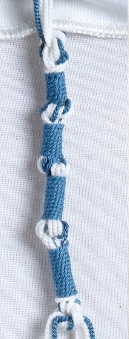
Rav Amram Gaon
The Rav Amram Hagaon is rather simple and similar in the tying process to Classic Ashkenazi. However, it is only applicable for Tchellet. It is done by wrapping three loops of white Shammash, then the Tchellet 3 times, then the white again, for a total of 13 groups. This method, however, is not very widespread, followed only by a few Babylonian and Sefardic communities.
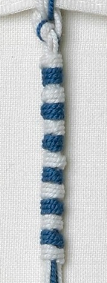
GR"A
This GR"A Shita is very similar is the Shita of Rav Amram Hagaon. They key difference, however, is while Avram Hagaon only has 1 double knot, one at the beggining, the GR"A splits up 5 double knots throughout the 13 groups, dividing them 4-4-4-1. This Shita is followed by Lithuanian Yeshivas and Mitnagdim, as well as some Ashkenazim.
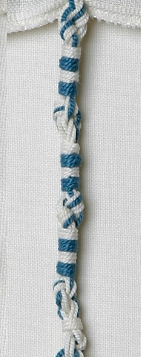
Chinuch
The Chinuch Shita is very similar to the Shita of the GR"A (and also Rav Amram Hagaon) except for the pattern in the how the 13 groups are distributed. The GR"A goes 4-4-4-1, while the Chinuch goes 3-3-3-4. This Shita is generally followed by Ashkenazim who take upon themselves the Mitzvah of Tchellet.
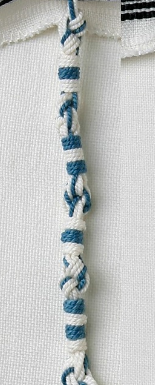
Rosh
The Rosh (Rabeinu Asher) Shita is almost identical to the Chinuch Shitta, except the Rosh holds that 7 Tcheillet Chulyot of Tchellet and 6 Chulyot of white are required, as opposed to the Chinuch, Gr"a, and Rav Amram HaGaon methods, who all hold that 6 Tchellet and 7 White are required. The tying process, however, in the third section, the Chinuch goes White-Tchellet-White, while the Rosh once again goes Tchellet-White-Tchellet. This Shitta is not widely followed today.
Ra'avad
The Ra'avad method is the same as Classic Ashkenazi, except when tying Tchellet the Shammash is switced with every loop, alternating between the Tchellet Shammash and a White Shammash, forming a 7-8-11-13 pattern. Generally, this Shita is used by Jews with roots in Southern France, once home to the Ra'avad himself.
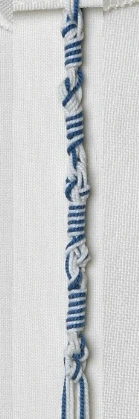
Rav Schachter
This Shita is very similar to Ashkenazi, except for the tying order and when tied Tchellet, 4 strings of Tchellet are used. This method has a total of 7 Chulyot of 7, starting and ending with three winds of white. This Shita is mostly followed by students of YU, as well as a large portion of the American-Jewish community.
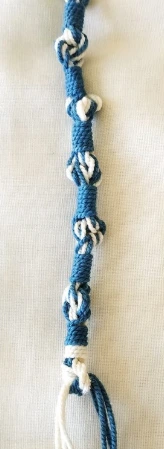
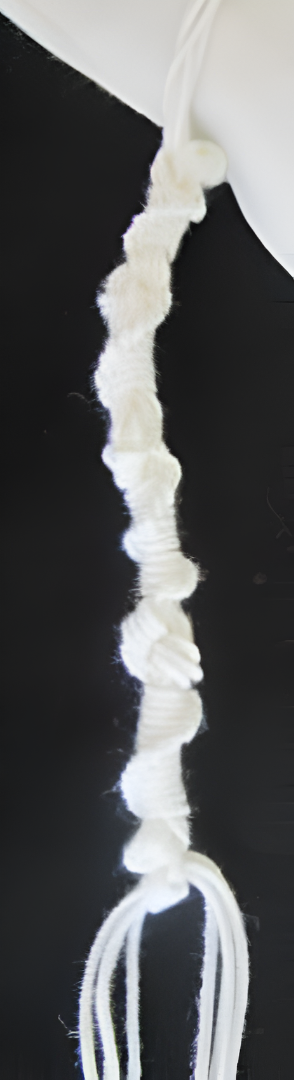
Classic Sfardi
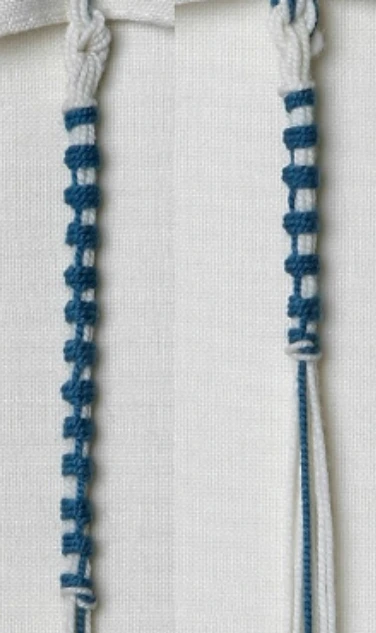
Classic Sfardi is very similar to the Ashkenazi method, except unlike the Askenazi method, where the Shamash simply wraps around the rest of the strings, the Shamash itself is wrapped under each loop, creating a bump. For the Tallit Gadol, the 7-8-11-13 pattern is used, while on the Tallit Kattan, it is tied with a 10-5-6-5 pattern, representing the letters of Hashem's name. This Shitta is followed by almost all Sfardim, and some Charedim.
Ari/Radzyn (Chabbad)
While this method, introduced by the Ariz"l back in the 16th century, is very similiar to Classic Sfardi, it is different in one key component: while the Classic Sfardi method wraps the Shammsh once under every loop, Chabbad wraps it 2-3 times, creating more of a ladder-like pattern, as opposed to the spiral of Classic Sfardi. For this particular Shita, the 7-8-11-13 pattern on both the Tallit Kattan and Tallit Gadol. This Shita is used almost only by Chabbad.
Rambam
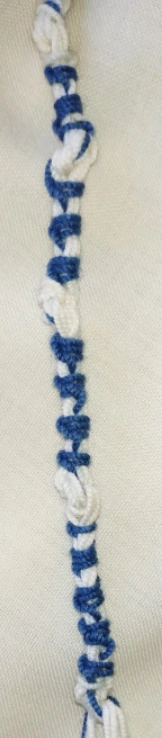
This method is a very unique and complicated one. Rambam has either 7 or 13 Chulyot (sections), each Chulya being comprised of 3 loops tucked in under themselves to create a lasting bond. Each loop, save for the first and last one, is of Tchellet. The Rambam method can also be used for white Tzitzit, and is generally followed by Yemenite Jews, and by some Israeli Jews for Tchellet.
Ben Ish Chai
This Shita, derived from the Ben Ish Chai's introduction to Lech Lecha, is very similar to Classic Sfardi, yet there is a very different order in which this is tied, as after 3 loops, the Shammash is folded in between the 4 strings, creating Chulyot, similar to the Rambam, yet is divided between 5 knots, in accordance to the MIdrash in Tanchuma. This custom is generally followed by Iraqi Jews, such as the the Rahag Raphi Sayegh Shlit"a.
Tosfot
This Shita is a very unique one, derived from a Tosfot to Menachot Daf 43 Dibur Hamatchil "ולא יפחות". The Tosfot paskin that it's tied with 4 Regular strings and 4 Tchellet strings, and that only 7 Chulyot are used, creating a pattern reminiscent of the GR"A Method. This Shita is generelly followed by some types of Ashkenazim.
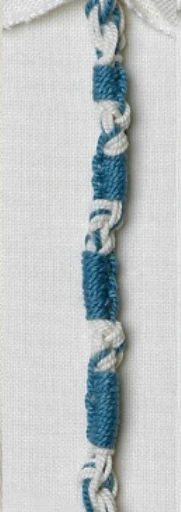
So which Shita should be used to tie Tzitzit?
When tying with only white strings, the answer is simple; Ashkenazim tie Ashkenazi, Sefardim tie Sfardi, etc. The real question is about Tchellet.
M'Deorayta, the only obligation for Tzitzit is a knot and some windings. However, M'Dirbanan, there is also a requirement for "Chulyot". The Gemara explains Chulyot to be 3 windings, and states there should be "between 7 & 13". Most Rishonim understand this to refer to the amount of Chulyot, and most Shitot are tied like this, most notably Rambam 7 & Rambam 13, each comprising of 7 & 13 Chulyot of 3 Windings of Tchellet. However, some Shitot have Chulyot of both White & Tchellet, for example, GR"A. Other Rishonim, though, understand the 3 windings to refer to amount of Tchellet windings, and each Chulya has between 7 and 13 windings, such as the Ra'avad Method.
Another important topic is the amount of Knots. There's a debate between the Rishonim as to what a knot is, though the accepted method is 4 strings knotted with 4 strings to make a knot. Biblically, only the first knot is required, and many Shitot, like Rambam & Rav Amram Gaon, have only 1 knot. However, based of a Midrash in Tanchuma, most Shitot have 5. So which method should be used when tying Tchellet?
Rav Shchechter originally Paskin that we should all, both Ashkenazim & Sefardim, tie Rambam, as he has the oldest Mesora, and Rav Dov Lior also holds such, as did R' Aharon Lichtenshtein zt'l (however, his son Rav Moshe has GR"A). However, Rav Schechter now has a Shita according to his understanding of the Tosfot, and recomends either that or the Tosfot Method for Ashkenazim. The GR"A, Chinuch, Ra'avad, & Ariz"l (though more for Chabbad) are all good too, as well as Rambam, according to some Poskim. For Sefardim, the Rambam is ideal, though Ben Ish Chai is fine, as well as Ariz"l. However, Classic Ashkenazi/7-8-11-13 should NOT be used for Tchellet, as well as Classic Sefardi. Despite being most commonly used today for Tzitzit, they were introduced after the loss of Tchellet.